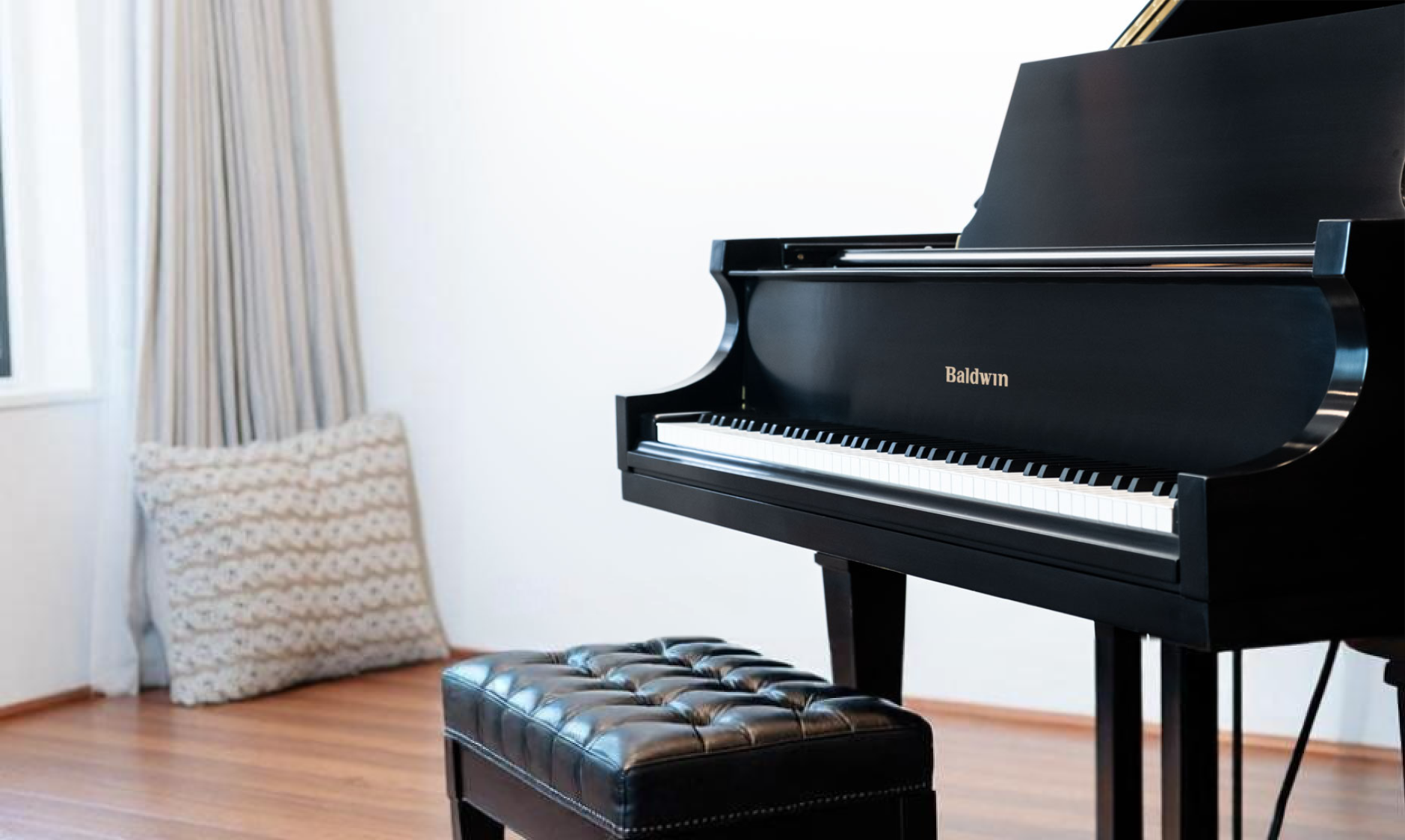
Dwight Hamilton Baldwin originally began as a retail dealer of other manufacturers' instruments in 1862. It wasn't until 1890, after losing key dealership contracts, that he pledged to build the "best piano that could or would be built."
The Golden American Era
For over a century, the Baldwin Piano Company stood shoulder-to-shoulder with Steinway & Sons as the preeminent American piano builder. Their Artist Series grand pianos, particularly the 7-foot SF-10 and 9-foot SD-10 concert grands, were highly praised for their powerful projection and innovative scale designs.
By the mid-20th century, Baldwin was the largest US piano manufacturer, frequently endorsed by prolific musicians from Aaron Copland and Leonard Bernstein to Dave Brubeck and Ray Charles.
Corporate Changes and Decline
In the late 20th century, Baldwin began to face increasing pressure from global competition, particularly from Japanese manufacturers like Yamaha and Kawai, who offered more consistent quality at scale.
In 2001, Baldwin was acquired by the Gibson Guitar Corporation. Under Gibson’s ownership, the company underwent significant restructuring, including the closure of key American manufacturing facilities. By the mid-2000s, production of Baldwin pianos had largely moved overseas, primarily to Asia.
These changes marked a major turning point for the brand. While the Baldwin name continued, many musicians and technicians noted a shift in consistency and overall build quality compared to the company’s earlier American-made instruments.
Modern Baldwin Pianos
Today, Baldwin operates as a brand within Gibson’s broader portfolio. Most Baldwin pianos are manufactured outside the United States, with production focused on more affordable consumer instruments rather than high-end concert grands.
Vintage Baldwin pianos—especially those built in the United States during the 20th century—remain highly regarded by pianists and technicians. Models such as the SF-10 and SD-10 are still considered some of the finest American concert grands ever produced.
Modern Baldwin pianos, while more accessible in price, are generally positioned in a different market segment than their historic counterparts.