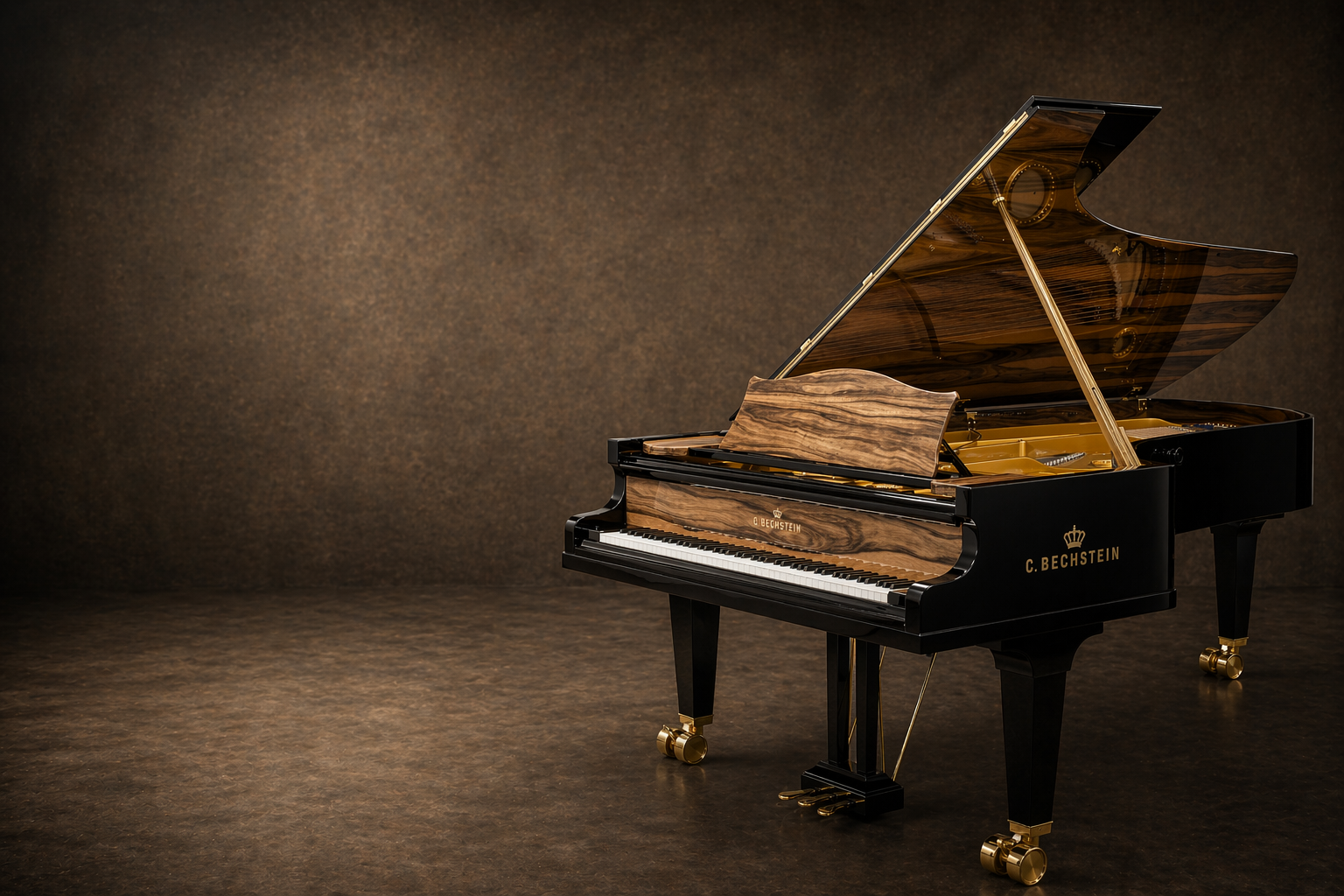
C. Bechstein was founded in 1853 by Carl Bechstein in Berlin, Germany, and quickly became one of Europe’s most respected piano manufacturers. From its earliest years, the company focused on producing instruments with exceptional clarity, responsiveness, and tonal refinement.
European Tonal Philosophy
Bechstein pianos are often associated with a distinctly European tonal aesthetic. Compared to many American pianos, they tend to emphasize:
- Clarity and transparency of tone
- Precise articulation
- A lighter, more responsive touch
Rather than producing a heavy or powerful sound, Bechstein instruments are typically designed for nuance and detail, making them especially well-suited for chamber music and refined solo performance.
Historical Prestige
By the late 19th century, Bechstein had become a favored instrument among European aristocracy and leading pianists. The company supplied pianos to royal courts and major cultural institutions, helping establish its reputation as a premier builder.
Bechstein was also widely used in salons and smaller performance spaces, where tonal clarity and responsiveness were highly valued.
War and Recovery
World War II had a significant impact on Bechstein’s operations. Manufacturing facilities were damaged, and the company lost access to key international markets.
In the post-war years, Bechstein gradually rebuilt its production capabilities and reputation, though the global piano industry had changed significantly, with increased competition from American and later Japanese manufacturers.
Modern Bechstein Structure
Today, C. Bechstein operates as part of a larger group that includes multiple product lines:
- C. Bechstein (premium handcrafted instruments made in Germany)
- Bechstein Academy (mid-tier instruments with German design influence)
- W. Hoffmann (more affordable European-made instruments)
For technicians and buyers, understanding which line a piano belongs to is essential, as quality, materials, and construction differ across these tiers.
Technician and Buyer Perspective
Bechstein pianos are highly regarded for their precision and tonal clarity, but they can feel quite different from American instruments.
From a technician standpoint:
- Actions may feel lighter and more responsive
- Voicing tends to favor clarity over power
- Regulation and voicing work may require a different approach than American pianos
Older Bechstein pianos, particularly those from the pre-war era, can be exceptional instruments but should be evaluated carefully for structural condition due to age.
Modern Bechstein pianos remain firmly in the high-end category and are often compared with other top European manufacturers such as Blüthner and Bösendorfer.