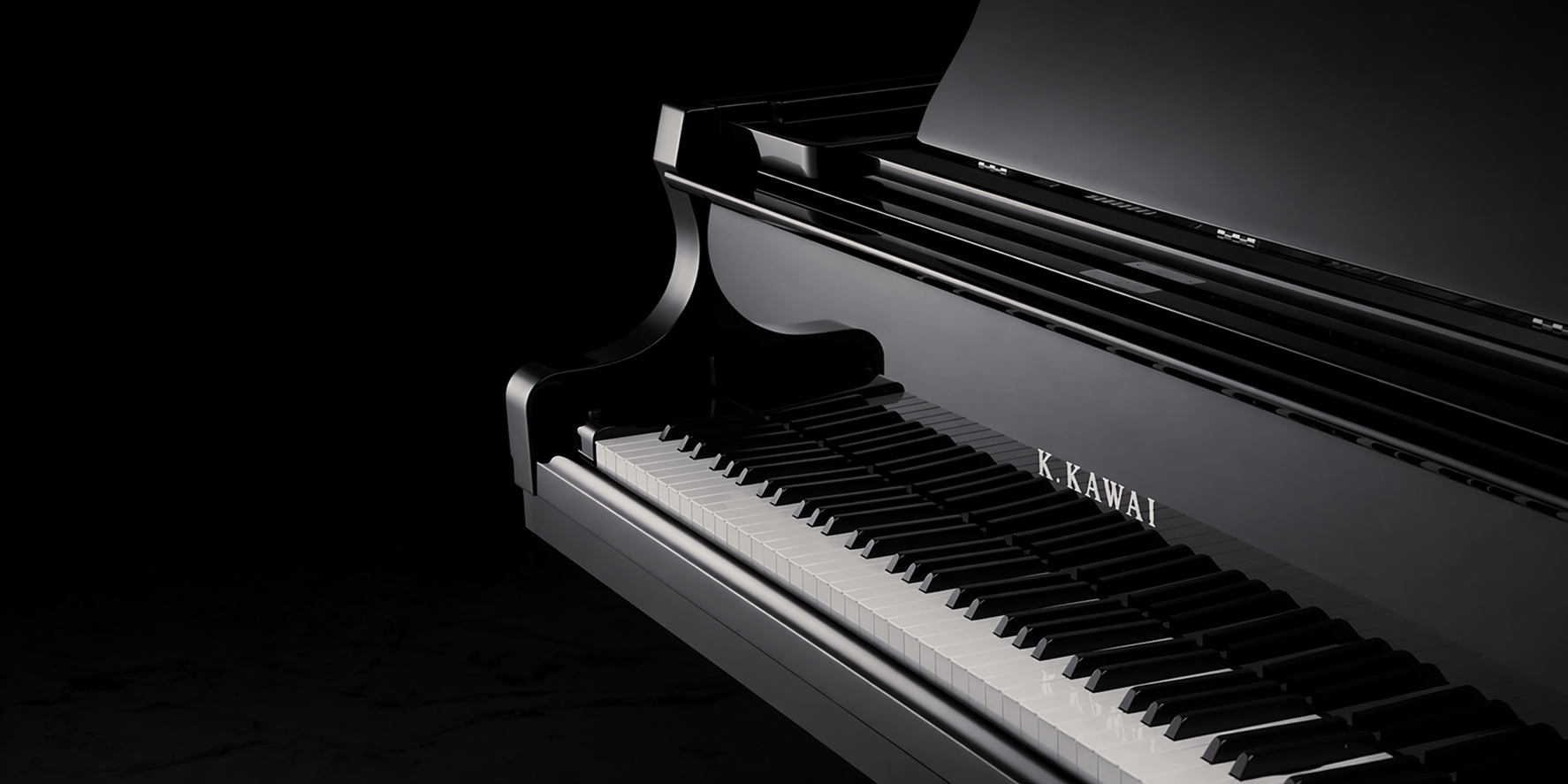
Kawai was founded in 1927 by Koichi Kawai, a skilled piano technician and engineer who had previously worked with Yamaha. From its beginning, Kawai focused on precision engineering and innovation, establishing itself as a major force in the Japanese piano industry.
Design Philosophy
Kawai has consistently emphasized stability, consistency, and long-term reliability in its instruments. While many manufacturers rely heavily on traditional wooden components, Kawai has taken a different approach by incorporating advanced composite materials into critical action parts.
This philosophy is based on the idea that:
- Wood can be affected by humidity and temperature changes
- Composite materials can provide greater dimensional stability over time
Composite Action Technology
One of Kawai’s most defining innovations is its use of ABS and later ABS-Carbon composite materials in piano actions. These materials are used in place of certain wooden components to improve durability and maintain consistent performance.
For technicians, this has several implications:
- Reduced susceptibility to humidity-related issues
- More consistent action geometry over time
- Different wear characteristics compared to traditional wooden actions
While some purists prefer all-wood construction, Kawai’s composite actions are widely respected for their reliability and precision.
Tonal Characteristics
Kawai pianos are generally described as having:
- A warmer, more mellow tone than Yamaha
- Smooth transitions across registers
- A slightly less aggressive attack
This tonal profile makes them particularly appealing in settings where a more blended or rounded sound is desired.
Shigeru Kawai Line
Kawai’s premium line, Shigeru Kawai, represents the company’s highest level of craftsmanship. These pianos are built with greater attention to detail, higher-grade materials, and more extensive hand-finishing.
They are often compared directly with high-end European and American concert grands and are increasingly used in professional performance settings.
Technician and Buyer Perspective
For technicians and buyers, Kawai pianos are known for their consistency and reliability across production runs. Unlike some legacy brands, where quality can vary significantly by era, Kawai instruments tend to maintain a more uniform standard.
The use of composite materials can be a point of discussion, but in practice, these designs often result in fewer environmental stability issues.
As with any piano, individual condition and maintenance history remain critical, but Kawai is generally considered one of the most dependable modern piano manufacturers.