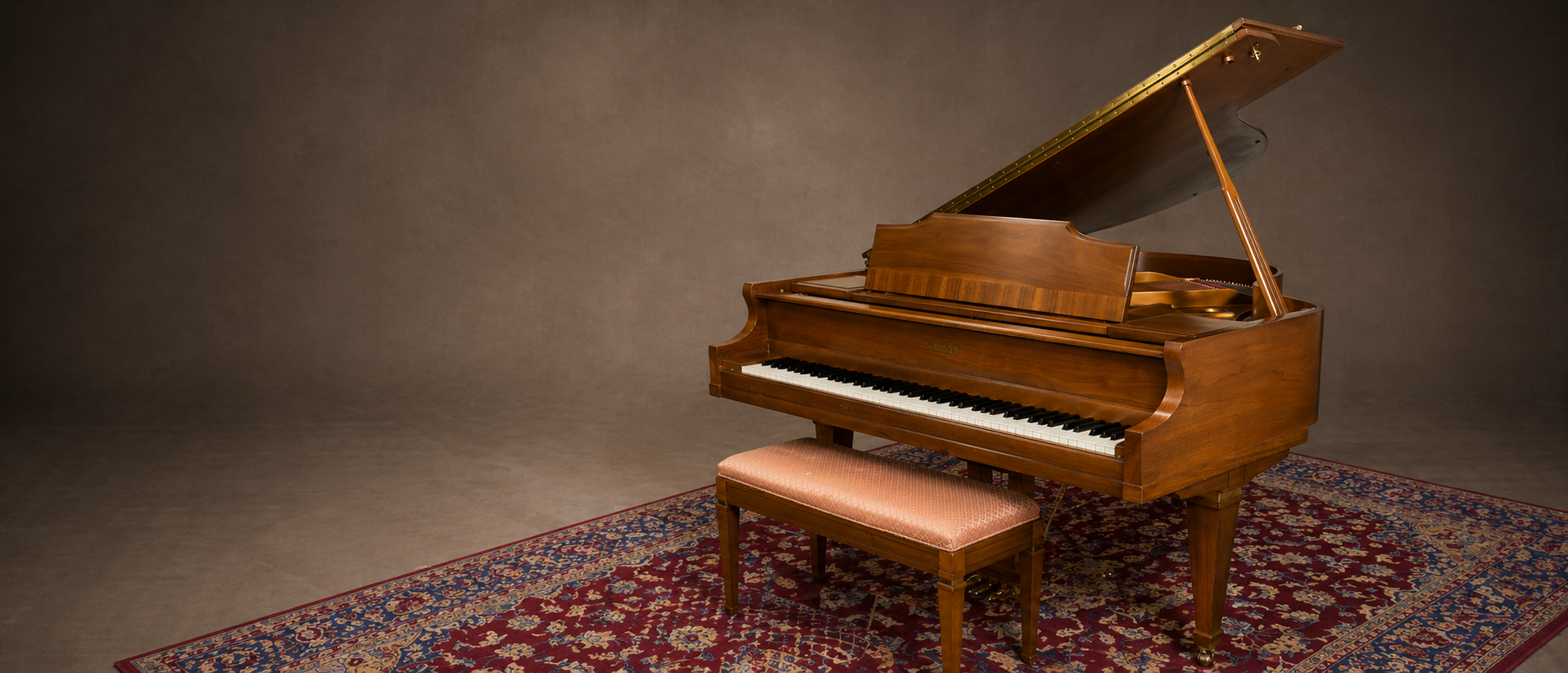
Kimball began in Chicago in 1857 as W.W. Kimball & Company, originally operating as a music dealer before moving into organ and later piano manufacturing. By the late 19th and early 20th centuries, Kimball had become one of the biggest names in American piano production, building instruments at an enormous scale and placing pianos in homes, schools, and institutions across the country.
Scale and Market Position
Kimball was not primarily a boutique or concert-focused manufacturer. Instead, it became known for producing large numbers of practical, accessible pianos for the American home market. This made the brand extremely common, especially in the Midwest, and helps explain why so many Kimball uprights, consoles, and spinets are still encountered today.
In technician and owner terms, Kimball is best understood as a broad middle-tier brand. Many instruments were dependable, serviceable home pianos rather than elite performance instruments. Their value today depends heavily on era, condition, scale design, and how well the piano has been maintained.
Jasper Acquisition and Indiana Production
A major turning point came in 1959, when W.W. Kimball was acquired by Jasper Corporation. In 1961, piano production moved from Illinois to West Baden, Indiana.
This transition matters. Early Indiana-built Kimballs have a reputation for being somewhat uneven, with quality-control issues reported during the initial years after the move. Later production improved, and Kimball again became a very large producer of pianos and organs during the 1960s and 1970s.
Quality and Technician Perspective
Kimball pianos are often judged very differently depending on the specific model and era.
Broadly speaking:
- Many mid-century Kimball consoles, studios, and uprights were built as affordable, practical home instruments
- Their cabinetry is often solid and durable
- Musical performance is usually more serviceable than exceptional
- They are generally not viewed in the same class as top American concert makers
That said, it is a mistake to dismiss all Kimballs equally. Some later American-made Kimballs are respectable everyday instruments, and condition matters more than brand reputation alone.
Viennese Classic and Bosendorfer Influence
During the Jasper/Kimball International period, Kimball acquired Bosendorfer. Some Kimball instruments marketed in the “Viennese” vein drew on Bosendorfer-inspired design ideas, though this did not transform the entire Kimball line into a premium European-level product.
For owners and buyers, these pianos can be interesting, but they should still be evaluated on their own build quality and condition rather than branding alone.
End of Historic Kimball Production
In 1996, Kimball International formally ceased piano manufacturing. That makes the historic Kimball piano brand defunct.
However, the Kimball name has later been used on some instruments sold by unrelated parties. For Piano.wiki purposes, that distinction is important: historic W.W. Kimball / Kimball Piano and Organ instruments should not automatically be grouped together with later third-party-branded Kimball pianos.
Buyer and Restoration Perspective
Kimballs are common enough that they are often evaluated more on practicality than rarity. For many owners, a Kimball can be a decent home piano if it has been maintained well and still holds tune properly.
For restoration, the math is highly case-specific. Because Kimball produced so many instruments, not every older example justifies major restoration costs. But a clean, stable American-made Kimball in good condition can still make sense as an affordable musical instrument, especially for home use or institutional settings.