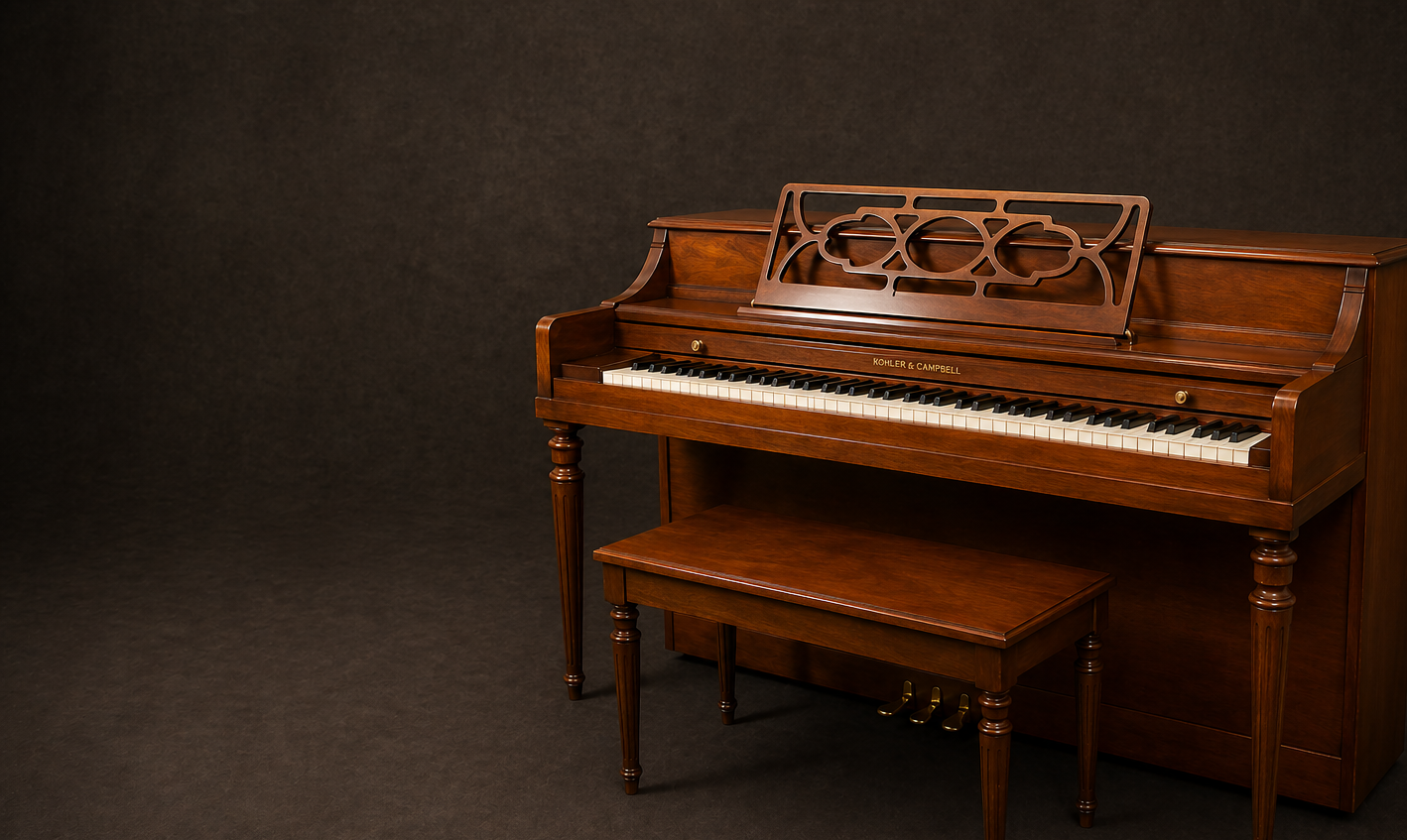
Kohler & Campbell was founded in 1896 in the United States and was part of the broader American piano manufacturing industry during the early and mid-20th century. Like many brands of its time, it produced upright and console pianos for home use rather than focusing on concert-level instruments.
American Manufacturing Era
During its original production period, Kohler & Campbell built pianos in the United States that were generally considered mid-tier instruments. These pianos were designed for practical home use and were part of the large-scale American piano market.
For technicians and buyers:
- Early American-made instruments can be serviceable and durable
- They are not typically considered high-end, but can be solid everyday pianos depending on condition
Transition to Imported Production
As the American piano industry declined in the mid-to-late 20th century, Kohler & Campbell followed a common pattern:
- Original manufacturing ceased
- The brand name was retained
- Production shifted to overseas manufacturers
In later years, Kohler & Campbell pianos have been produced by companies such as Samick.
Quality Variation by Era
Kohler & Campbell pianos should always be evaluated based on when and where they were built.
Broadly:
- Pre-1980s American-made pianos → mid-tier, sometimes solid
- Post-1980s imported pianos → quality varies depending on manufacturer and model
This makes it especially important to identify:
- Country of origin
- Approximate production year
- Specific model
Technician and Buyer Perspective
For technicians:
- Construction and materials differ significantly between American-made and imported versions
- Later instruments often resemble other Samick-built pianos in design and behavior
For buyers:
- The name alone is not a reliable indicator of quality
- Understanding the production era is critical
- Many later models are best evaluated alongside other entry-level imports
Important Note
Kohler & Campbell is a defunct American manufacturer, but the brand name continues to be used on pianos produced by other companies, including Samick. As a result, two pianos with the same name may have entirely different origins, construction, and quality levels depending on when they were made.