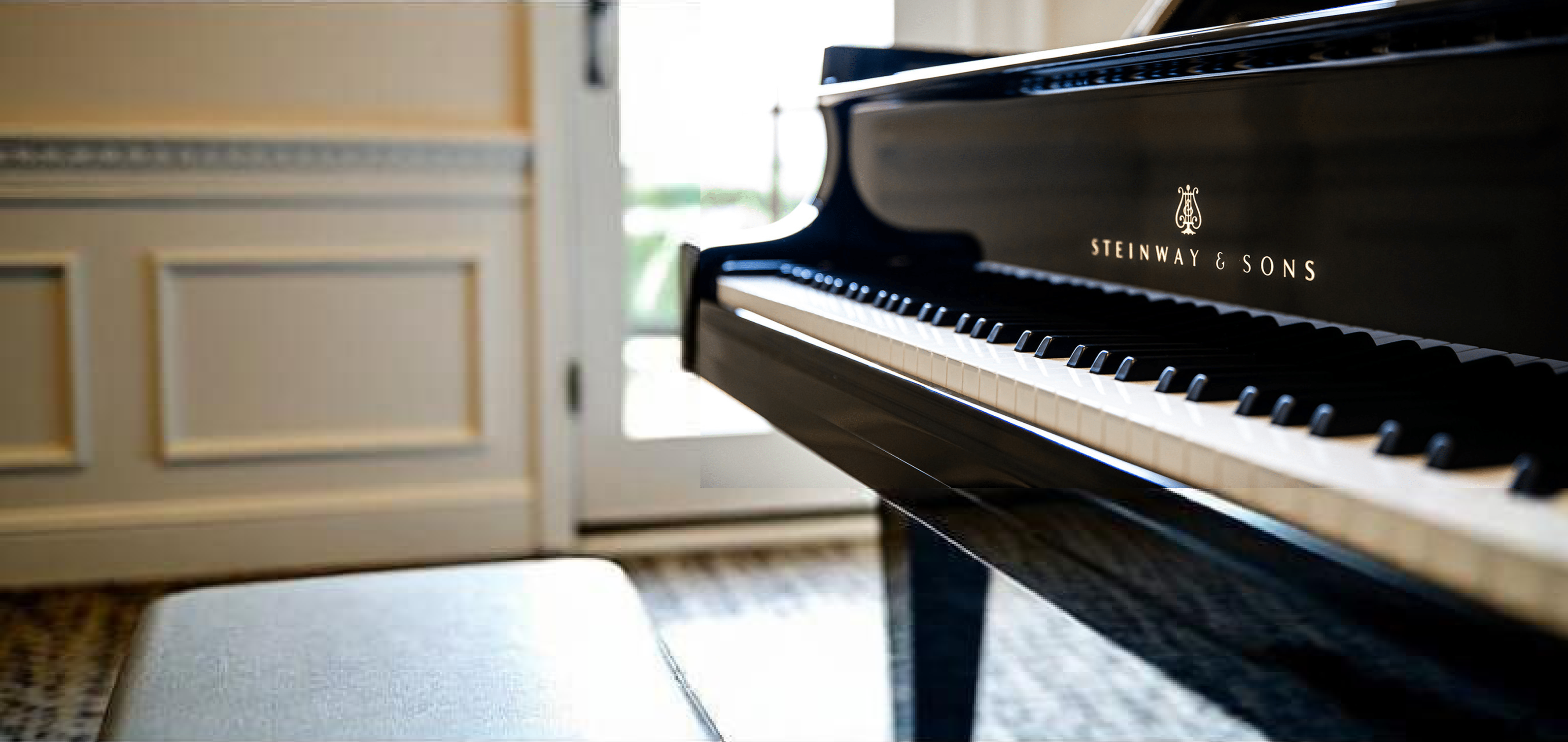
Steinway & Sons was founded in 1853 in New York City by Heinrich Engelhard Steinweg, who anglicized his name to Henry E. Steinway after emigrating from Germany. From the beginning, the company positioned itself not simply as a piano builder, but as an innovator in piano design and manufacturing.
Innovation and the Modern Piano
Steinway’s importance in piano history goes far beyond brand prestige. During the 19th century, the company secured more than 100 patents related to piano construction, many of which helped shape the modern piano as we know it.
These developments included improvements in:
- plate design
- overstrung scaling
- bridge and rim construction
- action refinement
- structural durability
While Steinway did not invent every major feature now associated with the modern piano, the company played a major role in refining, standardizing, and popularizing many of them.
Growth and International Recognition
Steinway gained recognition quickly in the second half of the 19th century, winning major awards at international exhibitions and establishing itself as one of the premier piano makers in the world.
By the late 1800s, Steinway had become closely associated with:
- concert performance
- conservatories
- elite private ownership
- institutional prestige
This reputation was reinforced by aggressive marketing, artist relationships, and a consistent focus on high-end production.
New York and Hamburg Production
In 1880, Steinway opened its Hamburg factory, which remains one of the company’s two primary production centers today.
Modern Steinway pianos are primarily associated with:
- New York production for the Americas
- Hamburg production for most of the rest of the world
This distinction matters.
Technicians, pianists, and dealers often note meaningful differences between New York and Hamburg Steinways in areas such as:
- tonal character
- action feel
- voicing tendencies
- finishing details
While both are genuine Steinway instruments, they are not always viewed as interchangeable in character.
Manufacturing Philosophy
Unlike large-scale manufacturers built around extreme standardization, Steinway has maintained a more labor-intensive production model. Its pianos are still assembled with significant handwork and are intended to occupy the highest end of the acoustic piano market.
For technicians and players, this means Steinway pianos are often valued for:
- tonal complexity
- color range
- responsiveness
- projection potential
At the same time, individual instruments can vary more than heavily standardized production pianos, which is one reason performers often prefer to select specific Steinways rather than rely on the name alone.
Steinway in the Modern Market
Today, Steinway remains one of the most influential names in piano manufacturing and is still widely viewed as the benchmark for concert grand pianos.
The company’s influence extends beyond the flagship Steinway line through:
- Boston (designed by Steinway, built by Kawai)
- Essex (designed by Steinway, built by Pearl River)
This broader structure has allowed Steinway to maintain a presence across multiple market tiers while preserving the flagship brand as a premium product.
Technician and Buyer Perspective
For technicians and buyers, Steinway occupies a unique place in the market.
Older Steinways can be outstanding instruments, but they must be evaluated individually, especially with regard to:
- structural condition
- rebuilding quality
- scale integrity
- action condition
- originality vs restoration history
Modern Steinways remain premium instruments, but selection still matters. The brand name alone does not guarantee that every example will perform the same way.
Important Note
Steinway pianos are built in both New York and Hamburg, and these two production centers are often regarded as having distinct musical and technical characteristics. In addition, Boston and Essex are Steinway-designed lines but are not built by Steinway itself.