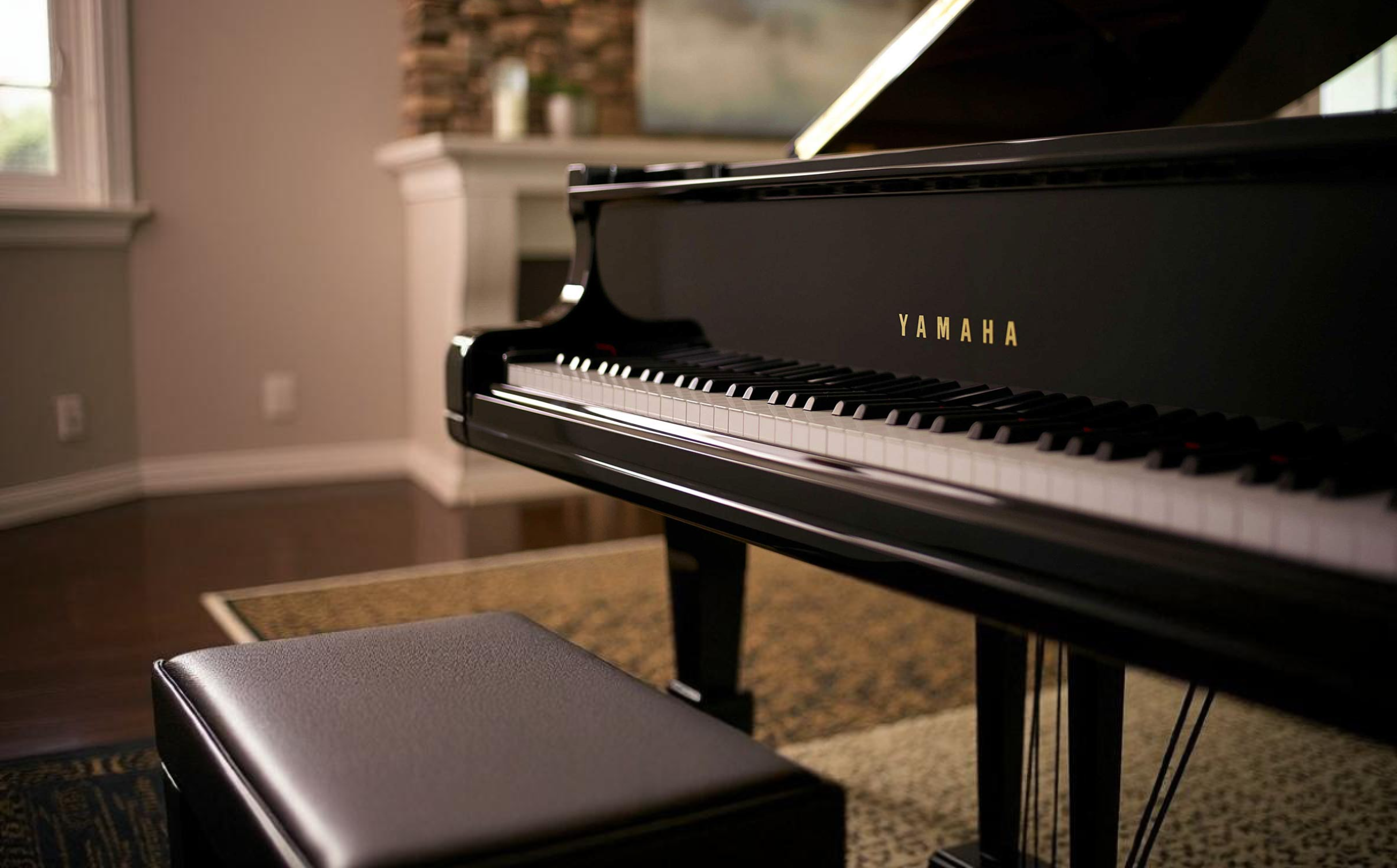
Yamaha’s history began in 1887 when Torakusu Yamaha, originally a medical equipment repair technician, repaired a broken reed organ at an elementary school in Hamamatsu, Japan. Recognizing the growing demand for Western musical instruments in Japan, he founded Nippon Gakki Co., Ltd., the company that would later become Yamaha Corporation.
Early Piano Manufacturing
Yamaha produced its first upright piano in 1900 and its first grand piano in 1902. During the early 20th century, the company focused heavily on refining manufacturing consistency and scaling production capabilities.
Unlike many European piano makers that relied heavily on small-scale artisanal methods, Yamaha developed a manufacturing philosophy centered around:
- precision
- repeatability
- industrial efficiency
- standardized quality control
This approach would eventually become one of the defining characteristics of the brand.
Expansion Into the Global Market
Following World War II, Yamaha expanded aggressively into international markets, particularly North America and Europe. During the mid-to-late 20th century, Yamaha pianos gained a reputation for reliability, tuning stability, and consistency between instruments.
This was a major shift in the piano industry.
Historically, many piano manufacturers produced instruments with significant variation from one piano to another. Yamaha’s manufacturing system helped establish a new expectation that a technician, institution, or performer could encounter a Yamaha piano almost anywhere in the world and experience relatively predictable performance characteristics.
Yamaha and Music Education
Yamaha also invested heavily in music education through the Yamaha Music School system, helping establish the brand globally among students, teachers, and institutions.
Over time, Yamaha upright and grand pianos became deeply integrated into:
- conservatories
- universities
- recording studios
- schools
- practice facilities
Today, Yamaha’s U-series uprights and C-series grand pianos are among the most widely used institutional pianos in the world.
Tonal and Design Philosophy
Yamaha pianos are generally known for:
- clarity
- precision
- bright tonal character
- responsive actions
- strong tuning stability
Compared broadly:
- many technicians and performers describe Yamaha pianos as more “transparent” and articulate than darker European designs
- some players prefer this clarity, while others favor warmer or more complex tonal palettes
This consistency has made Yamaha especially popular in educational and recording environments.
Modern Concert Development
In the modern era, Yamaha has continued investing heavily in high-end concert instruments. The flagship CFX concert grand, introduced in 2010, represents Yamaha’s highest-level concert platform and competes directly with elite European and American concert pianos.
At the same time, Yamaha remains one of the largest piano manufacturers in the world, producing instruments across a wide range of price points and categories.
Important Note
Yamaha serial numbers may include factory prefixes or production distinctions depending on manufacturing origin and era. For example, some serial sequences beginning with “T” are associated with Yamaha’s Thomaston, Georgia factory and should not be interpreted the same way as standard Japanese production serials.